


Key Takeaways
Top NIR analyzers deliver ±0.1% protein accuracy – the precision you need for contract compliance and premium capture.
Handheld analyzers ($5k–$8k) work for farm decisions; benchtop systems ($10k–$50k) are needed for official trading.
Protein analyzers measure chemistry, but can't detect insects, foreign material, or visual defects – you need both for complete QC.
Modern NIR gives you protein, moisture, and oil in 30–60 seconds – fast enough to test every load at intake.
The ROI case: better segregation, fewer disputes, and avoiding the €500–€2,000 cost of a rejected load.
If you trade, store, mill or grow grain, choosing the best grain protein analyzer is no longer optional – it’s the difference between capturing premiums and losing money on every load.
A single rejected truck can cost you €500–€2,000. Inaccurate protein readings lead to pricing disputes with farmers, downgraded shipments, and missed contract specs. Meanwhile, your competitors are making faster, more confident decisions because they have the data you don’t. Modern grain protein analyzers – mostly based on Near-Infrared (NIR) spectroscopy – now deliver lab-level results in seconds, giving you the numbers you need to price accurately, avoid disputes, and protect your margins.
But protein is only half the story. Visual defects – insects, foreign material, broken kernels, fusarium damage – can downgrade a “perfect protein” load just as fast. That’s why leading operations now combine NIR protein analysis with automated visual inspection (like GrainODM) for complete quality control.
This guide compares leading models side-by-side, with real pricing and specs, to help you find the best grain protein analyzer for your operation – whether you’re a farmer, trader, elevator manager, or mill QA lead.
Why Grain Protein Analyzers Matter More Than Ever
Without reliable protein data, you’re guessing – and guessing costs money:
- Farmers lose premiums when they can’t prove protein levels, or sell high-protein wheat at feed prices because they don’t know what they have.
- Traders and elevators face disputes with suppliers, rejected loads from buyers, and blending mistakes that cost thousands per batch.
- Mills and processors struggle with inconsistent flour specs, off-grade shipments, and the labor cost of manual testing that can’t keep up with intake volumes.
A grain protein analyzer solves these problems by giving you fast, defensible numbers – the kind you can use in contracts, audits, and pricing negotiations.
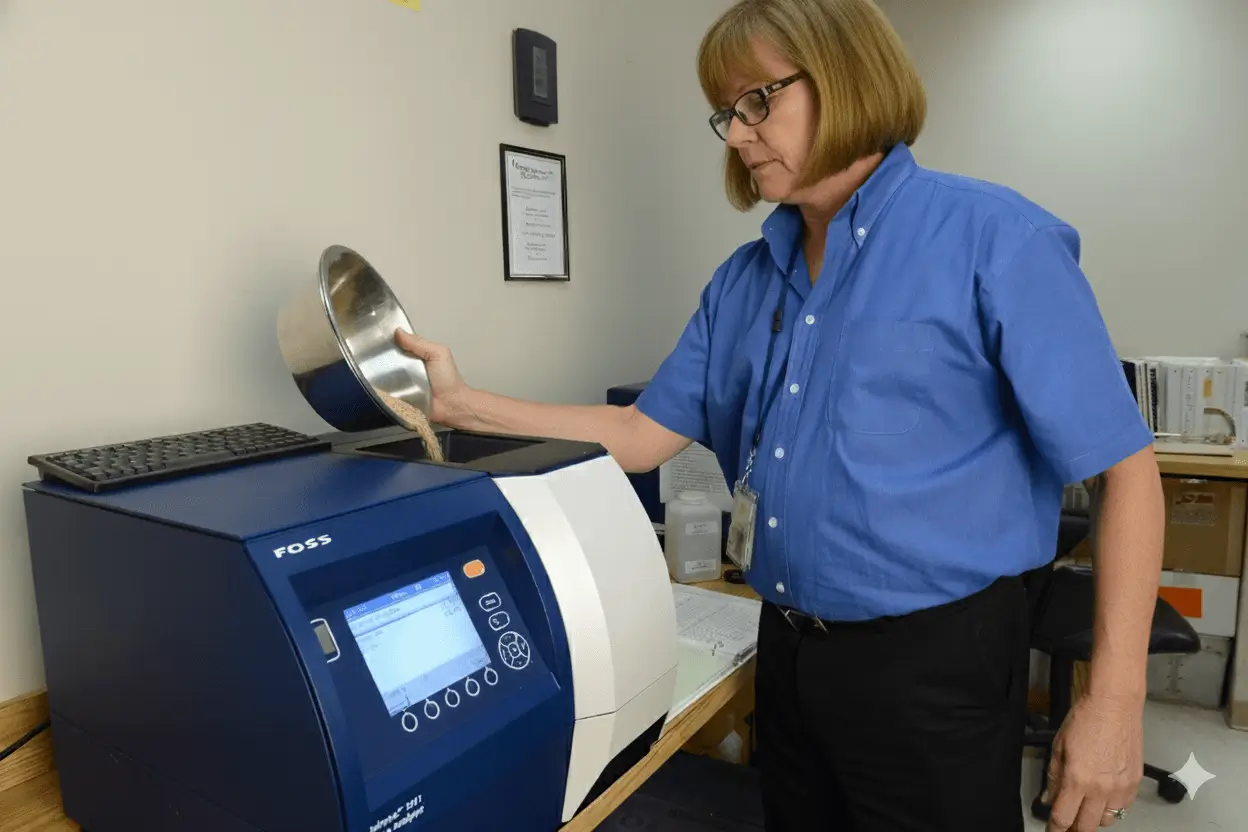
Tools like the FOSS Infratec 1241 are now the global standard for official grain trading, delivering ±0.1% protein accuracy. Portable analyzers like GrainSense GO put the same capability in a farmer’s hand for under $8,000.
But here’s what protein analyzers can’t do: they can’t see insects, foreign material, or fusarium damage. A load with “perfect” 14% protein can still be rejected for visual defects. That’s why forward-thinking operations combine NIR protein testing with automated visual inspection – chemistry plus vision for complete quality control.
How Protein % Affects Grain Price Premiums
Grain protein content directly drives price in milling wheat and durum markets. A grain protein tester or NIR analyzer gives you the number that determines whether you capture a premium or leave money on the table.
- Contract thresholds: Many EU and North American milling contracts specify a minimum protein level (e.g. 12.5% or 13%). Delivering 12.2% when the contract calls for 12.5% can mean a discount of €3–€8 per tonne — or rejection. One percentage point above spec often commands a premium in the same range.
- Why accuracy matters: If your grain protein meter or NIR reads 0.3% low, you may sell high-protein wheat at feed price or accept a discount you didn’t need to. If it reads 0.3% high, you risk a dispute or rejected load when the buyer’s lab gets a different result. ±0.1% accuracy (achievable with benchtop NIR) reduces disputes and helps you price and segregate correctly.
- Segregation and blending: Knowing exact protein levels lets elevators and mills segregate lots and blend to hit contract specs, avoiding both overpayment for unnecessary protein and underpayment when you could have claimed a premium.
Investing in a reliable grain protein analyzer pays off when the alternative is missed premiums, disputes, or rejected loads costing €500–€2,000 per incident.
How Grain Protein Analyzers Work (NIR, NIT, Dumas)
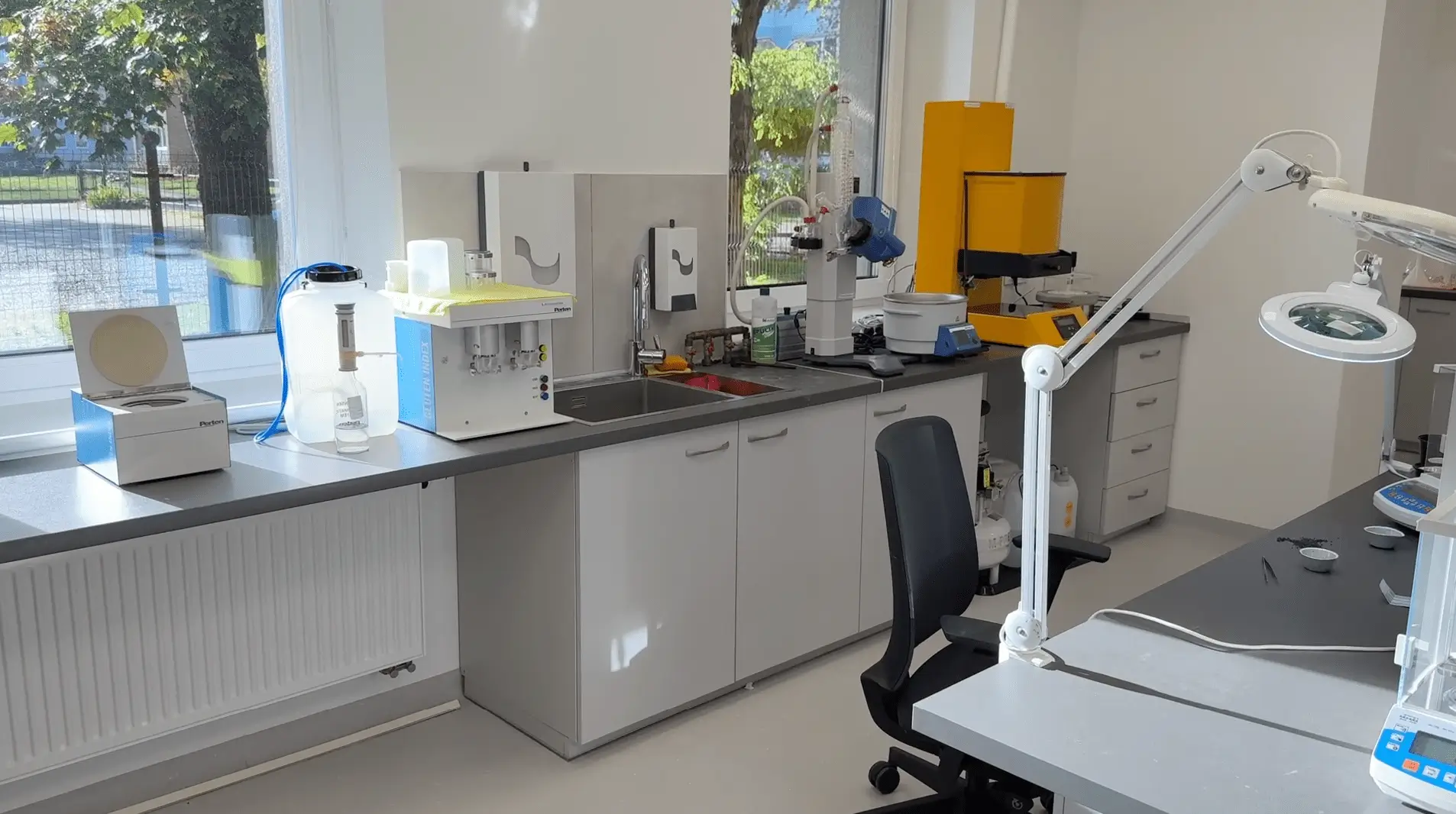
A well-equipped grain lab combines NIR analyzers, moisture testers, and sample preparation equipment for comprehensive quality assessment.
NIR & NIT – The Workhorses of Modern Grain Testing
Most contenders for best grain protein analyzer use Near-Infrared (NIR) or Near-Infrared Transmission (NIT) spectroscopy. Here’s what that means in practice:
How it works: The analyzer shines infrared light through or onto a grain sample. Different compounds (protein, moisture, oil) absorb light differently. The instrument reads these patterns and calculates your results – no chemicals, no sample destruction.
Why it matters for your operation:
- Speed – Get protein, moisture, and oil in 6–60 seconds. No waiting for lab results.
- Multi-parameter – One scan gives you protein, moisture, oil, test weight, and often starch, gluten, fiber.
- Consistency – Remove human error and operator variation from your quality checks.
- Audit trail – Digital results you can store, export, and defend in disputes.
The main differences between analyzers come down to calibration quality (how many samples the model was trained on), accuracy (±0.1% vs ±0.5%), and whether the unit is designed for field, lab, or inline use.
For a deeper understanding of how NIR technology works in grain analysis, see our comprehensive guide on grain analyzers explained.
Dumas Combustion – Reference Benchmarks
Dumas combustion analyzers (LECO, Elementar, etc.) burn a precisely weighed, ground sample in oxygen and measure nitrogen to calculate protein. They are:
- Very accurate (often ±0.05–0.1% protein) and recognized as reference methods.
- Slower and destructive (2–5 minutes per sample, plus prep) and require consumables and gas.
They anchor NIR calibrations and resolve disputes. For everyday “what’s my protein right now?” questions at the farm or intake pit, NIR/NIT is the practical standard, and Dumas remains the referee in the background.
Types of Grain Protein Analyzers
When people search for the best grain protein analyzer, they’re usually looking at one of four categories:
1. Portable / Handheld NIR Analyzers
- Battery-powered, used in the field or at small receiving points.
- Example: GrainSense GO – handheld NIR, seconds per reading from a handful of kernels; measures protein, moisture, oil, carbs and syncs data (with GPS) to the cloud.
- Ideal for farmers, agronomists, small traders.
2. Benchtop Whole-Grain NIR Analyzers
-
Stationary instruments at elevators, labs, mills.
-
Examples:
-
FOSS Infratec 1241 – scanning monochromator NIR, officially approved in many countries; ±0.1% protein accuracy with large global databases.
-
PerkinElmer Inframatic 9500 – analyzes moisture, protein, oil and more in <30 seconds on whole grains.
-
KPM Analytics AgriCheck – cost-effective NIR analyzer measuring moisture, protein, oil, starch, fiber, gluten, etc., in whole grains.
-
-
Ideal for elevators, cooperatives, commercial labs.
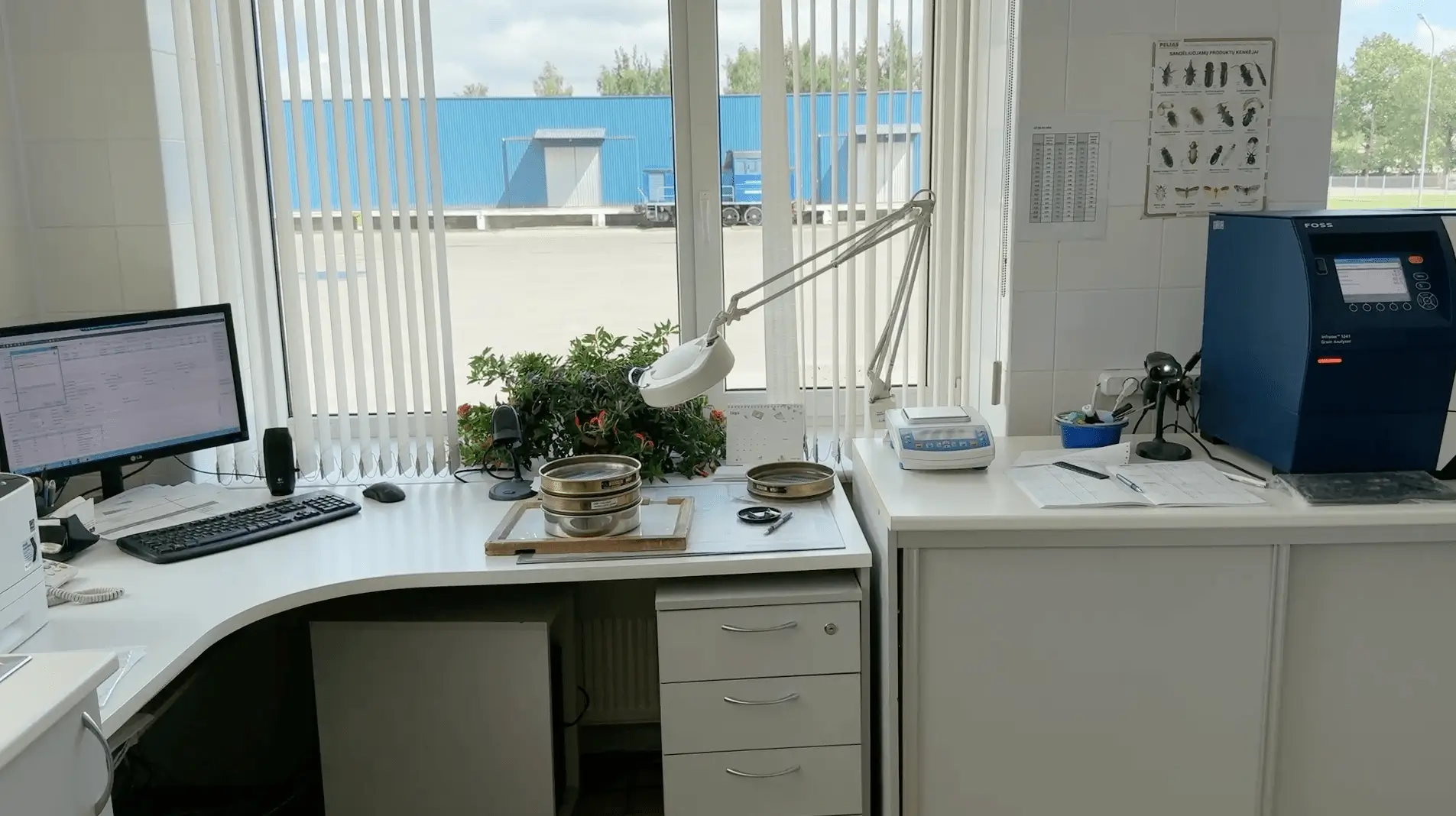
A typical grain lab setup: NIR analyzer for protein/moisture, computer for data management, and test sieves for purity inspection.
3. On-Combine / In-Line NIR Systems
- Mounted on combines or in processing lines.
- Example: CropScan 3300H – on-combine NIR that measures protein, moisture, oil, starch and fiber in grains and oilseeds every 5–8 seconds as they’re harvested, displaying maps in the cab and syncing to the cloud.
- Ideal for precision agriculture and automated in-line quality control.
4. Reference Lab Analyzers (Dumas/Kjeldahl)
- High-accuracy protein measurements for calibration, compliance and R&D.
- Ideal for central labs, not routine intake.
Protein vs Purity: Two Halves of Grain Quality
Protein analyzers tell you the chemistry: “What’s the protein, moisture, and oil content?”
Purity analyzers tell you the condition: “Is this grain clean, safe, and free of defects?”
Buyers and standards care about both. You can have perfect 14% protein wheat that gets rejected because of:
- Foreign matter (stones, chaff, weed seeds)
- Broken and shrivelled kernels
- Discoloration and mold spots
- Insect damage or live insects
- Cross-contamination between grain classes
Traditional purity inspection means manual sieving and counting – slow, subjective, and expensive. Modern AI-based purity analyzers use cameras and computer vision to classify every kernel in seconds, with consistent results you can audit and defend.
A modern grain inspection workflow looks like this:
- NIR protein analyzer → protein, moisture, oil, starch (chemistry)
- AI purity analyzer → foreign material, insect damage, broken kernels, visual defects (condition)
- Reference lab (when needed) → Dumas/Kjeldahl for disputes or compliance
The key insight: you need both. The best protein analyzer in the world won’t catch a weevil infestation or fusarium-damaged kernels. And visual inspection won’t tell you if protein meets contract spec. Learn more about grain purity testing standards that define these requirements.
Got Protein Covered? Add the Visual Layer.
Your NIR analyzer measures chemistry – but it can't see insects, foreign material, or fusarium damage. GrainODM adds AI-powered visual inspection in 3 seconds per sample, catching what protein analyzers miss. Together: complete quality control.
Key Factors When Choosing the Best Grain Protein Analyzers
When you strip away the marketing, these factors really decide what’s “best”:
1. Type & Use Case
- Portable: If you’re a grower or agronomist scouting fields, or a small buyer checking trucks on the yard, a portable NIR like GrainSense GO is often the most useful.
- Benchtop: If you run an elevator, mill or lab testing many samples per day, a benchtop NIR (FOSS Infratec, Inframatic 9500, KPM AgriCheck) fits better.
- On-combine / in-line: If you want real-time protein maps or automated process control, look at systems like CropScan 3300H.
- Reference lab: Only needed if you manage calibrations or handle high-stakes disputes.
Training time: Most modern analyzers are designed for minimal training – 1–2 hours for portables, half-day for benchtops. FOSS and PerkinElmer offer certification programs for commercial operators.
2. Parameters Measured
Minimum set:
- Protein + moisture (for pricing and safe storage).
Nice-to-have or essential in many use cases:
- Oil (oilseeds, high-oil maize)
- Starch (corn, wheat, barley)
- Test weight
- Gluten, fiber, ash, Zeleny index (milling & baking)
- Amylose (rice)
Check that the analyzer has calibrations for your grains (wheat, barley, corn, soy, rice, oats, rye, pulses, etc.). Premium systems come with global or regional calibration packages; budget units may have limited coverage.
3. Accuracy & Calibration Quality
- Top NIR systems like Infratec typically quote ±0.1% protein accuracy, based on massive calibration datasets (50,000+ samples).
- Handhelds often run in the ±0.2–0.5% range, enough for farm-level decisions.
- Budget devices from less known brands may quote similar numbers, but without the same depth of validation or global use.
Look for:
- Big, diverse calibration databases.
- Regular calibration updates.
- Ability to adjust or localize calibrations if your grain differs from the “global average”.
Calibration maintenance reality: Most manufacturers recommend annual calibration checks. FOSS offers subscription updates; others may require sending the unit back. Budget $500–$2,000/year for calibration maintenance on benchtop systems.
4. Speed & Sample Size
- Portables: Seconds, using just a few kernels.
- Benchtops: 20–60 seconds on 300–650 ml of whole grain.
- On-combine: Continuous readings every 5–8 seconds as grain flows.
If you test hundreds of samples a day, those seconds add up.
5. Portability & Durability
- Handhelds: look for battery life, IP rating, and shock resistance.
- Benchtops: need dust-resistant housings and stable optics – major brands design specifically for harsh grain environments.
- On-combine: systems must withstand vibration, dust and temperature swings.
6. Integration & Software
- Ethernet, USB, Bluetooth, Wi-Fi, cloud connections.
- Fleet management and calibration distribution (FossConnect, NetPlus) if you have multiple sites.
- Easy data export into LIMS, ERP or farm management systems.
Service consideration: Ask about local service support and typical repair turnaround. Downtime during harvest or intake season is costly – major brands like FOSS and PerkinElmer have global service networks.
7. Price & ROI
Approximate real-world ranges (USD, European pricing similar in EUR):
- Handheld NIR: GrainSense GO ~$5,200–$7,500, often with 2-year warranty and cloud license.
- Benchtop NIR: typically $10,000–$40,000+, depending on brand and modules.
- On-combine NIR: around $10,000+ depending on configuration.
Key ROI drivers:
- Better segregation (selling high-protein lots at premiums).
- Avoiding discounts and load rejections.
- Optimised blending and fertilizer decisions.
Budget brands (Biobase, Drawell, generic Alibaba analyzers) lower the entry ticket, but may lack proven calibrations and robust service, which matters if you rely on the numbers for trading.
Top Picks: Best Grain Protein Analyzers by Category
Best Overall for Commercial Grain Trading: FOSS Infratec
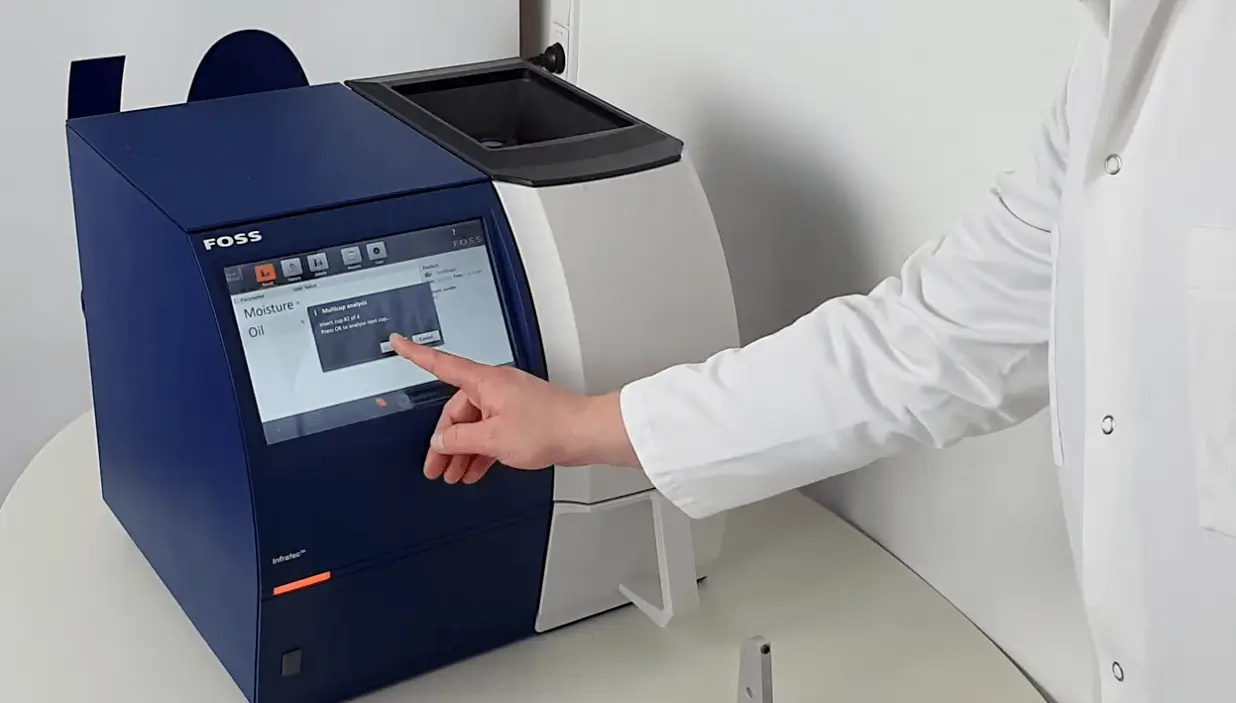
The FOSS Infratec features an intuitive touchscreen interface for fast, accurate grain analysis.
- Why it stands out: De facto global standard for official grain trading; widely approved for moisture, protein, oil and more.
- Tech: NIR (scanning monochromator; transmission on whole grain).
- Accuracy: Protein typically ±0.1% vs reference.
- Approvals: USDA/GIPSA approved (US), meets EU official trade requirements, accepted by most national grain boards.
- Ideal for: Export terminals, large elevators, grain boards, central labs.
Best Portable Grain Protein Analyzer: GrainSense GO
- Why it stands out: Simple, fast and truly mobile – one of the few handheld devices that gives multi-parameter readings (protein, moisture, oil, carbs) from a few kernels in seconds.
- Tech: Handheld NIR; smartphone + cloud integration with GPS.
- Price: Typically $5,200–$7,500 in real offers.
- Ideal for: Farmers, agronomists, consultants, small buyers.
Best Value Benchtop: KPM AgriCheck
- Why it stands out: Strong multi-parameter performance at a lower price point than top-tier FOSS/PerkinElmer units.
- Tech: NIR with a patented linear monochromator.
- Params: Protein, moisture, oil, starch, fiber, gluten, Zeleny, amylose, FFA.
- Ideal for: Regional mills, elevators and labs needing serious data without the very highest price tag.
Premium High-Throughput: PerkinElmer Inframatic 9500
- Why it stands out: High-speed, high-accuracy NIR for busy grain handling sites.
- Tech: NIR transmission (570–1100 nm) with scanning grating optics.
- Speed: Typically <30 seconds per sample.
- Ideal for: High-volume elevators, mills and multi-site networks.
Best On-Combine Analyzer: CropScan 3300H
- Why it stands out: Turns protein and moisture into live maps during harvest.
- Tech: NIR installed in the clean grain elevator of the combine.
- Params: Protein, moisture, oil, starch, fiber; continuous updates every 5–8 seconds.
- Ideal for: Precision ag operations, large farms, contractors.
Budget & Emerging Options: Biobase, Drawell, Alibaba NIR
- Why they stand out: Lower cost NIR analyzers (typically $6,000–$10,000) for entry-level labs.
- Caveats: Check calibration quality, support, and consider verifying against a reference (Dumas or a certified NIR).
Comparison Table: Best Grain Protein Analyzers (2026 Snapshot)
| Model | Type | Key Params | Accuracy | Price | Best For |
|---|---|---|---|---|---|
| FOSS Infratec | Benchtop | Protein, moisture, oil |
±0.1% | $20k–$50k+ | Official trading |
| Inframatic 9500 | Benchtop | Protein, moisture, oil |
±0.1–0.2% | $25k–$40k | High-volume |
| KPM AgriCheck | Benchtop | Protein, moisture, oil |
±0.1–0.2% | $10k–$20k | Value choice |
| GrainSense GO | Handheld | Protein, moisture, oil |
±0.2–0.5% | $5.2k–$7.5k | Farmers |
| CropScan 3300H | On-combine | Protein, moisture, oil |
±0.2% | $10k+ | Precision ag |
| Biobase/Drawell | Benchtop/ Portable |
Protein, moisture, oil |
±0.5% | $6k–$10k | Budget labs |
Completing Your Quality Control: Adding Visual Inspection
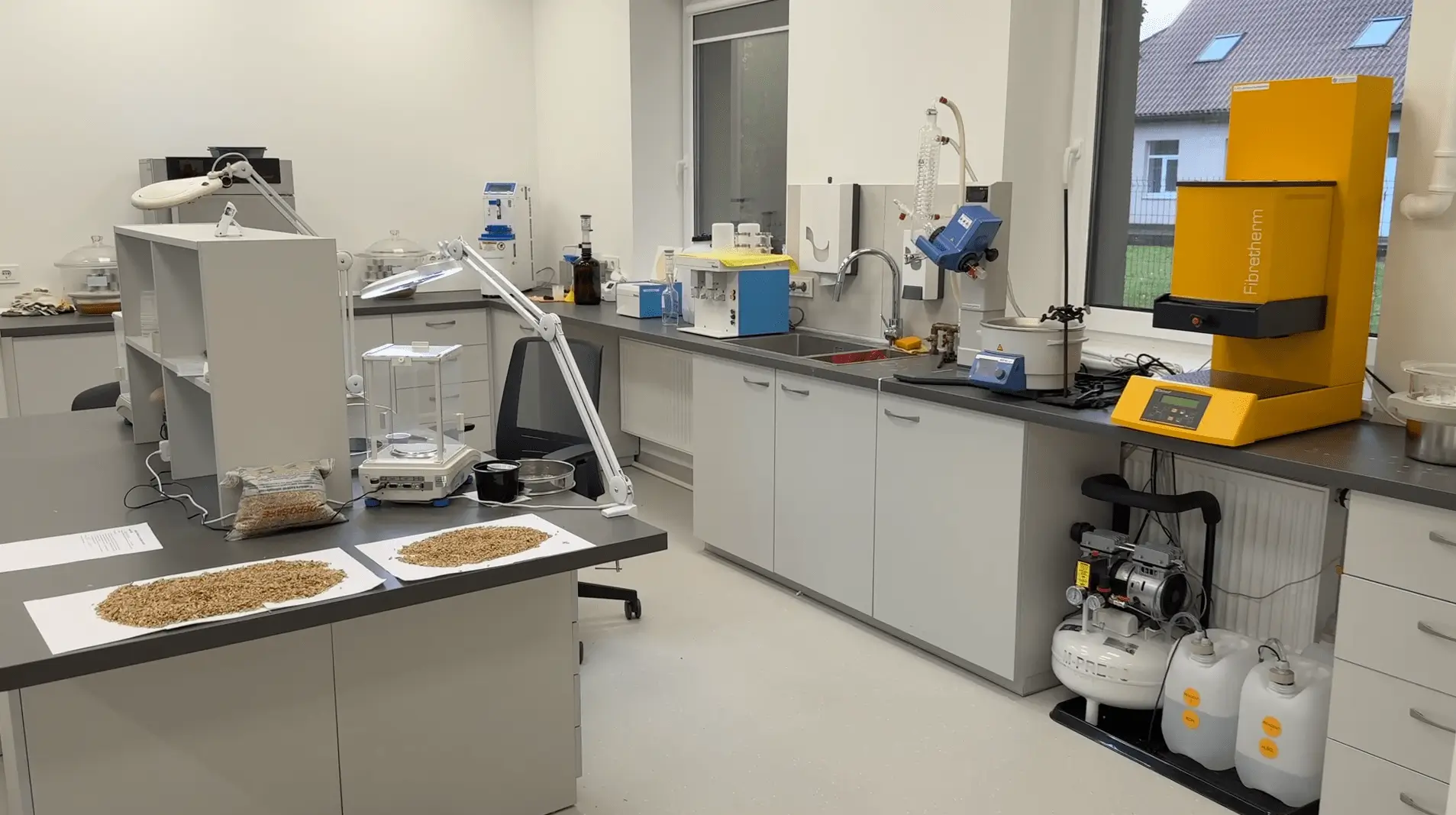
Beyond NIR analysis: grain samples prepared for visual inspection and purity testing—the other half of complete quality control.
Once you have a grain protein analyzer, you’ve solved half the quality equation. You know the chemistry. For a full picture of grain analyzer types — moisture testers, NIR, and AI vision — see our Grain Analyzers Explained guide. But what about the defects your NIR can’t detect?
What protein analyzers miss:
- Insect-damaged kernels and live insects
- Foreign objects (stones, glass, metal, plastic)
- Fusarium and mold-damaged grains
- Broken, shrivelled, or sprouted kernels
- Admixture and cross-contamination
The operational reality: Manual purity inspection takes 20–30 minutes per sample. That’s a bottleneck at intake, and it introduces operator variation that causes disputes.
The modern solution: AI-powered visual inspection systems like GrainODM analyze samples in just 3 seconds with consistent, auditable results. They photograph every kernel, classify defects automatically, and generate digital reports you can share with suppliers or buyers.
The combined workflow:
| Step | Tool | Output | Time |
|---|---|---|---|
| 1. Chemistry | NIR protein analyzer | Protein, moisture, oil | 30–60 sec |
| 2. Visual | AI purity analyzer (GrainODM) | Defects, foreign material, damage | ~3 sec |
| 3. Decision | Your team | Accept, reject, adjust price | Immediate |
This combination eliminates manual counting, reduces labor costs by up to 80%, and gives you defensible data for pricing negotiations and quality claims.
Calculate your savings: Use our ROI Calculator to see how much you could save by combining NIR protein analysis with AI-powered visual inspection.
See how JSC Grainmore cut analysis time by 75× using this approach. For specific defect types, our guide on fusarium detection in European grains covers what to look for.
Final Thoughts: Making Your Decision
There’s no single “best” protein analyzer for everyone. Your choice depends on:
- Your role – Farmer checking loads? Elevator grading intake? Mill optimizing blends?
- Your volume – A few samples a day or hundreds?
- Your accuracy needs – Farm-level decisions (±0.3% is fine) or official trading (±0.1% required)?
- Your budget – $5k for a handheld or $40k for a certified benchtop system?
Our recommendations:
- Farmers and agronomists: GrainSense GO – portable, affordable, good enough for field decisions
- Elevators and cooperatives: KPM AgriCheck or FOSS Infratec – trade-grade accuracy, proven calibrations
- Mills and large operations: FOSS Infratec or Inframatic 9500 – highest accuracy, official approvals
- Precision ag operations: CropScan 3300H – real-time data during harvest
The bigger picture: NIR protein analysis is now table stakes. The competitive edge comes from combining it with automated visual inspection – getting complete quality data (chemistry + condition) faster than manual methods, with results you can defend in any dispute.
That’s the direction the industry is moving: integrated, automated, auditable quality control from intake to shipment.
Frequently Asked Questions
The [FOSS Infratec 1241](/hub/foss-infratec-1241-grain-analyzer-review) is widely considered the industry standard for official grain trading, with ±0.1% protein accuracy and global approval for moisture, protein, and oil measurements. It's ideal for export terminals, large elevators, and central labs.
Portable NIR analyzers like GrainSense GO typically achieve ±0.2–0.5% protein accuracy in field conditions, which is sufficient for farm-level decisions and small trading operations. Benchtop models offer higher precision (±0.1%) for commercial transactions.
NIR (Near-Infrared) spectroscopy is fast (6-60 seconds), non-destructive, and measures multiple parameters simultaneously. Dumas combustion is slower (2-5 minutes), destructive, but extremely accurate (±0.05–0.1%) and serves as the reference method for calibrating NIR instruments.
Yes, modern NIR grain protein analyzers typically measure protein, moisture, oil, starch, test weight, and sometimes gluten, fiber, and ash—all from a single scan. This multi-parameter capability makes them highly valuable for comprehensive grain quality assessment.
Protein analyzers measure chemical composition (protein, moisture, oil), while purity analyzers detect visual defects (insects, foreign material, broken kernels). Together, they provide complete quality control. Learn more about [grain purity testing standards](/hub/grain-purity-test/) and how AI systems like GrainODM automate visual inspection.
Portable analyzers can measure from just a few kernels (seconds), while benchtop models typically use 300–650 ml of whole grain and complete analysis in 20–60 seconds. On-combine systems analyze grain continuously as it flows through the harvester.
Handheld NIR analyzers range from $5,200–$7,500 (e.g., GrainSense GO). Benchtop models cost $10,000–$40,000+ depending on brand and features. Budget options start around $6,000 but may lack proven calibrations and support. ROI comes from better segregation, avoiding discounts, and optimized blending decisions.
A grain protein analyzer (or grain protein tester) is built to measure protein, moisture, and oil with high precision for pricing and contracts. A general grain analyzer covers the full range of grain testing — moisture testers, NIR composition, and AI vision for purity. For an overview of all analyzer types, see our [Grain Analyzers Explained](/hub/grain-analyzers-explained/) guide.
The New Standard in Grain Purity Analysis
Data, not guesswork. Learn how GrainODM sets a new benchmark for digital grain inspection.