


Key Takeaways
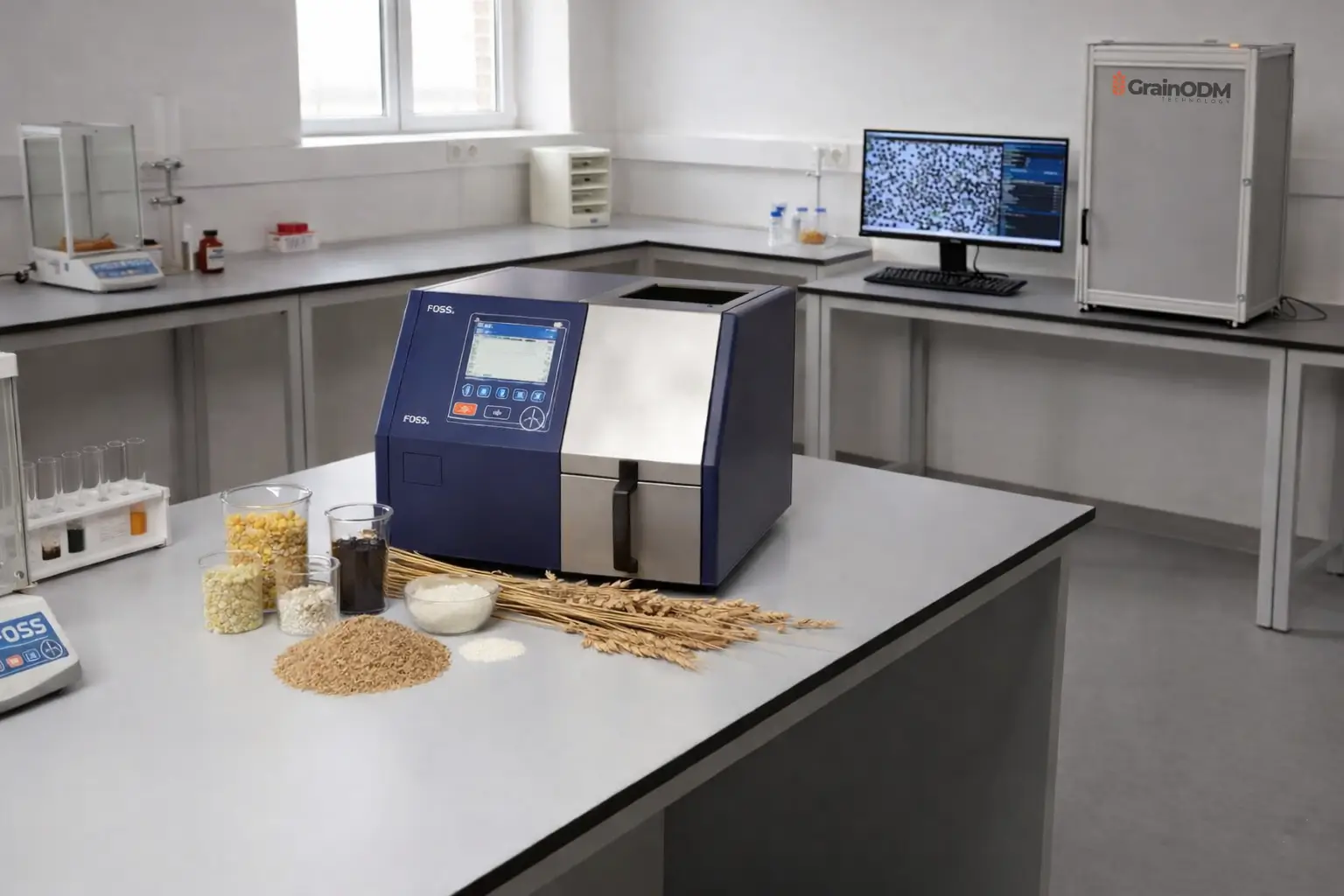
The FOSS Infratec 1241 is the industry benchmark for NIR grain analysis, trusted globally for protein, moisture, and oil measurements.
NIR transmittance technology penetrates whole grain kernels, providing more accurate results than surface-level reflectance systems.
Calibration transferability ensures identical results across multiple Infratec 1241 units, critical for large-scale trading operations.
The 1241 excels at chemical analysis but cannot detect physical defects; combining it with AI vision systems like GrainODM provides complete quality control.
Built for demanding environments with IP54 rating, delivering results in under 60 seconds with no sample preparation required.
In the global agricultural trade, the FOSS Infratec 1241 grain analyzer is recognized as the definitive benchmark. For any business involved in grain handling, the Infratec™ name represents the “global currency” of quality control. When looking to secure an accurate and reliable instrument, understanding the technical depth of the 1241 grain analyzer is the first step toward operational excellence.
The Industry Standard: Why the Infratec™ 1241 Dominates the Market
The FOSS Infratec 1241 is more than a standard lab tool; it is a widely used whole grain analyzer that has set the standard for NIR grain analysis for decades. Throughout the industry, when professionals discuss protein, moisture, and starch content, they are almost certainly referring to results generated by a FOSS system. For a comprehensive overview of different grain analyzer types and technologies, the Infratec 1241 consistently ranks as the industry benchmark.
The Infratec 1241 grain analyzer utilizes Near Infrared (NIR) technology in transmittance mode. Unlike surface-level reflectance systems, this technique allows the instrument to penetrate the whole grain kernel. This ensures the analysis is representative of the entire sample, which is critical for maintaining consistent results across multiple parameters such as moisture, oil, and protein.
Quick Specifications Overview
For a high-level look at why this instrument is the market leader, here are the core technical specs:
- Technology: NIR transmittance (Whole grain penetration)
- Sample Type: Whole grain (Wheat, Barley, Corn, Soy, Rice, etc.)
- Analysis Time: <60 seconds
- Parameters: Protein, moisture, oil, starch, wet gluten, density
- Use Case: Commercial trade, intake points, and high-volume laboratories
- Rating: IP54 (Dust and splash resistant for robust operation)
Robust NIR Technology and Calibration Stability
The core strength of the Infratec 1241 lies in its massive global database. Over years of harvests, FOSS has collected and cross checked samples to build a wide sample range for its calibrations. This database comprises thousands of samples from varying seasons and geographies, ensuring that the analytical performance remains reliable regardless of the specific agriculture conditions or harvest characteristic.
For a company involved in the import or export of grain, the installation of an Infratec 1241 provides immediate trust within the global supply chain. Calibrations built on a wide historical sample base allow seamless operation, with results accepted by traders worldwide.
FOSS Infratec 1241 vs Other Grain Analyzers
When comparing the Infratec 1241 to other grain analyzer options on the market, the primary differentiator is the database depth. While many budget analyzers use reflectance technology (which only scans the surface), the FOSS transmittance technology ensures a deeper, more accurate look at the kernel’s chemistry.
Furthermore, the 1241 offers superior “transferability.” In many cheaper systems, two different units might give slightly different readings for the same sample. With the FOSS Infratec 1241 grain analyzer, the high-end optics ensure that the result you get at one terminal is identical to the result at another, which is vital for a trader managing a large-scale import or export operation.
Key Product Features and Operational Handling
When evaluating the price of an infratec 1241 grain analyzer, one must consider the long-term service life and the ease of handling. The 1241 is built for the demanding environments of grain silos and intake points.
- Whole Grain Analysis: No grinding or complex sample preparation is required. This removes human error and allows for a test result in under 60 seconds.
- Rugged Design: The instrument is robust, featuring an IP54 rating to protect against dust and vibration during peak operation.
- Data Transferability: High-quality optics ensure that calibrations are fully transferable between different Infratec™ 1241 units, ensuring consistent quality across a wide business network.
Quality Control and Business Consistency
In grain analysis, consistent data is the primary driver of profitability. The FOSS Infratec 1241 provides a level of performance that allows a company to manage its inventory with high precision. Whether the goal is determining the protein content in wheat or the oil in rapeseed, the 1241 delivers an accurate profile that ultimately dictates the price of the product.
The global support network provided by FOSS ensures that the instrument remains a reliable asset for many years. With decades of experience in the field, the technical maturity of the 1241 makes it a stable solution for high-volume intake and rigorous test environments.
The regulatory landscape: Chemical precision meets physical purity
While the Infratec 1241 provides high-accuracy data for intrinsic quality parameters like protein and oil, it does not address the physical condition of the grain. In international trade, the “condition” factors - collectively known as Besatz - are often more decisive for price determination and load acceptance than chemical composition.
The governing standard for this in the European Union is EN 15587: Determination of Besatz. This standard covers wheat, durum, rye, triticale, and feed barley, defining Besatz as “all matter of a sample of grain other than the basic cereal of unimpaired quality”. For a detailed comparison of grain admixture standards between the EU and USA, including regulatory requirements for Besatz and dockage, refer to our comprehensive regulatory guide.
Completing the Lab: How GrainODM Compliments the Best

While the Infratec 1241 grain analyzer is the master of internal analytical chemistry, modern quality control requires a two-part approach. Even the most advanced NIR technology is unable to detect physical defects like broken kernels, foreign material, or insect damage.
This is exactly where GrainODM compliments the best hardware on the market. To reach the full standard of grain analysis required by ISO regulations and international contracts, visual inspection through grain purity testing is a mandatory requirement.
GrainODM offers a digital solution that automates the physical inspection.
Complete Your Grain Analysis Setup
Pair your FOSS Infratec 1241 with GrainODM for complete quality control
By integrating the chemical data from a FOSS Infratec 1241 with the automated physical data from a GrainODM device, a business achieves:
- Total Analytical Coverage: Merging NIR chemistry with AI-driven visual inspection for a 100% profile of the grain.
- Audit-Proof Results: Creating a complete digital record of both the internal and external quality of every load.
- Protecting Margins: Ensuring dockage and foreign material are calculated with the same precision that FOSS brings to protein and moisture.
Using GrainODM alongside an Infratec 1241 grain analyzer transforms a standard laboratory into an advanced data center. It ensures that every characteristic of the whole grain is documented, verified, and ready for the most demanding trader.
The Verdict: Reliability and Performance
Investing in a FOSS Infratec 1241 is a strategic move for any agriculture operation. While the price reflects its status as a premium product, the operational reliability and the elimination of quality disputes provide a significant return. It is the most widely used grain analyzer for a simple reason: it provides the most consistent result in the industry.
For an installation that is truly future-proof, the Infratec™ 1241 provides the chemical foundation, while GrainODM provides the visual certainty. Together, they represent the highest standard of grain analysis available today.
Frequently Asked Questions
The Infratec 1241 delivers consistent NIR spectroscopy readings across grain types with robust calibration models and precision optics. It provides repeatable moisture, protein, and oil results for continuous operation in processing and quality control environments.
The analyzer uses near-infrared (NIR) spectroscopy to scan samples and interpret spectral data into constituent values like moisture, protein, and oil. Place a representative sample in the cup, and results appear within seconds.
High repeatability, broad calibration library for cereals and seeds, user-friendly software, and durable hardware. These features enable rapid decisions on acceptance, blending, and pricing with application-specific calibrations.
Yes, the Infratec 1241 supports multiple grain types and can analyze mixed or composite samples using versatile calibration models. Custom calibrations are recommended for specific mixtures or regional crop variations.
Routine verification checks (daily or weekly) and full calibration updates (monthly or quarterly) are common. Verification with known standards ensures reliability, especially for new or changing crop varieties.
Verify sample preparation and representativeness. Clean the sample cup and optics, run instrument verification with standards, and confirm the correct calibration is selected. If issues persist, review software logs and contact FOSS support.
Yes, the Infratec 1241 is widely used in grain trade and official control due to its traceability, repeatability, and compliance with industry standards. Its documented specifications make it suitable for acceptance testing, grading, and contract negotiations.
Representative sampling and proper homogenization minimize bias and improve accuracy. The analyzer is optimized for bulk or composite samples rather than single kernels. Follow recommended sample weights and handling procedures for best results.
The New Standard in Grain Purity Analysis
Data, not guesswork. Learn how GrainODM sets a new benchmark for digital grain inspection.