


Key Takeaways
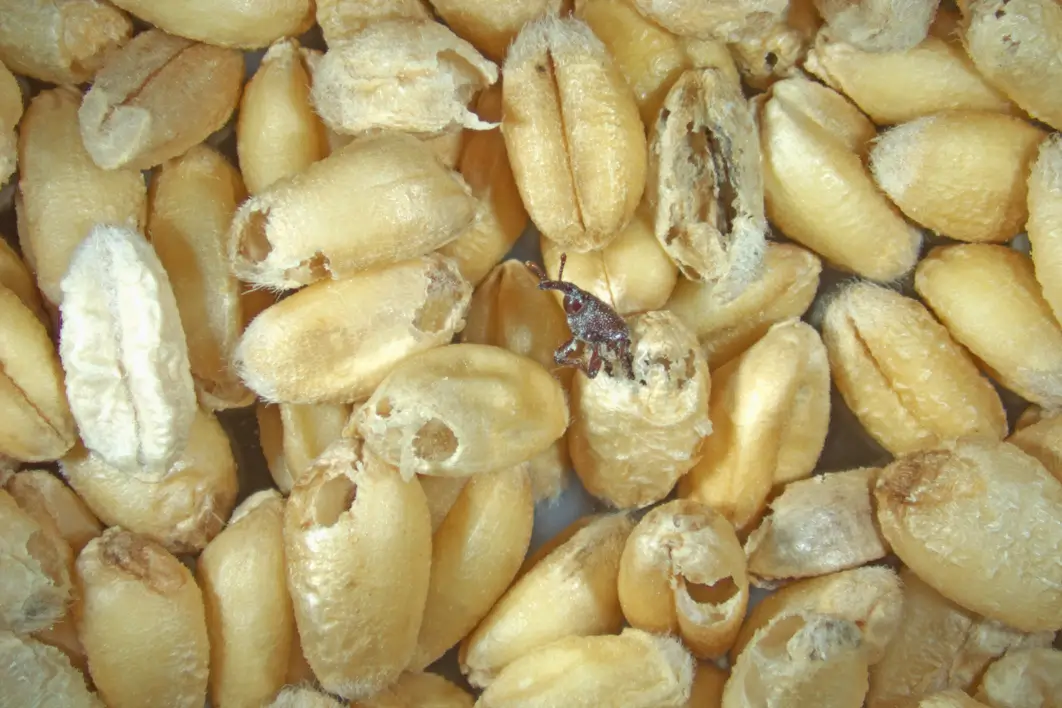
Internal-feeding pests like wheat and granary weevils remain the top driver of hidden post-harvest losses worldwide, with documented damage occurring inside seemingly clean kernels.
Climate change and pesticide restrictions expand pest pressure into northern Europe, raising compliance risk for exporters as pest ranges shift northward.
Unchecked weevil activity can destroy 12 to 26 percent of a lot's weight while degrading nutrition, safety, and trade value in storage trials.
Treat pest detection as a strategic control point: integrate digital inspection at intake and document every batch.
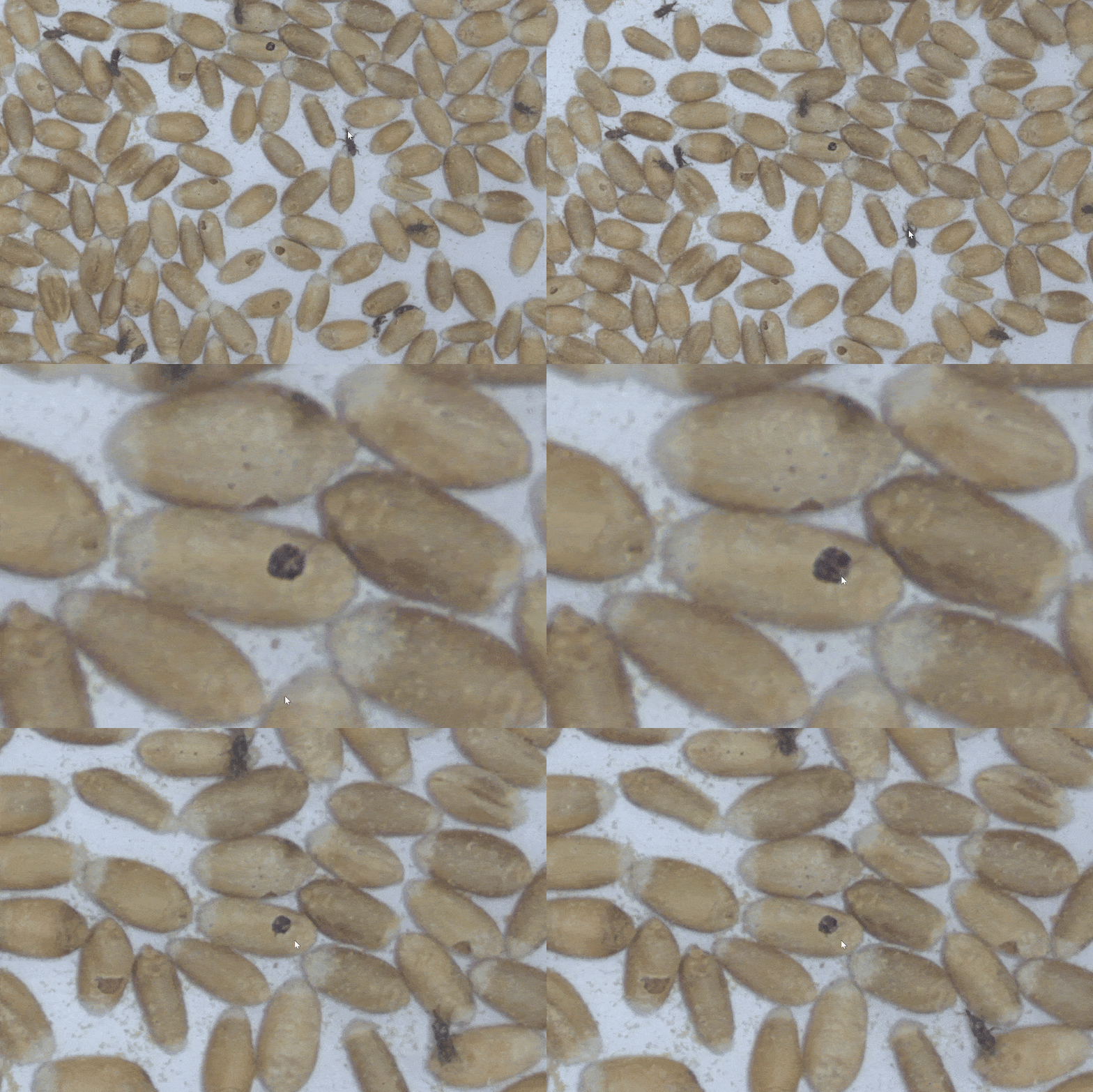
Wheat Weevils Found in an Intake Sample
During a recent intake, a wheat sample was inspected and multiple live wheat weevils were found already outside the kernels — meaning the early internal stage had passed unnoticed. At that point, insects had already moved freely through the sample, creating a risk of spreading further into storage. If the batch had been inspected earlier in the workflow, this situation could have been addressed sooner and the lot isolated before entering larger silos. GrainODM helps operators perform consistent, early-stage grain checks so insect-damaged kernels are spotted before they escalate into costly storage issues.
Watch GrainODM Capture the Evidence
Why Grain Storage Is Under Growing Risk
Stored-grain pest pressure is being driven upward by two converging trends:
- Tighter chemical regulations. Many effective insecticides are restricted or phased out, reducing the chemical toolkit available to storage operators (EcoCare Labs).
- Climate volatility. Warmer average temperatures, milder winters, and longer humid periods extend the breeding window for internal feeders (Journal of Stored Products Research).
As compliance and sustainability standards tighten, even a small infestation can trigger rejected shipments, penalties, and reputational damage.
Climate Change and Pest Migration
A 2022 study confirmed that climate change is altering the distribution of stored-product insects across Europe — regions that once enjoyed natural protection now face rising pest loads (Stored Products Research). For Baltic and Nordic elevators, this trend is expected to:
- Bring more frequent incursions of Sitophilus granarius and Sitophilus oryzae as average temperatures climb.
- Extend active periods before winter die-off, forcing longer monitoring seasons.
- Increase the likelihood that fumigant resistance reported in other regions will emerge locally, requiring closer documentation of treatment efficacy.
Economic and Quality Losses from Infestation
Reviews of global post-harvest losses show cereals consistently among the most affected commodities, with insects driving substantial shrinkage (MDPI Foods and FAO/PMC review). Even if mass losses are contained, infestations trigger:
- Nutritional degradation and off-odors.
- Moisture spikes that promote mold growth.
- Contamination with larvae, frass, or insect fragments that violate food-safety thresholds.
Wheat quality can also be compromised by other factors such as pre-harvest sprouting, which activates enzymes that degrade starch and impact milling value—similar to how pest damage affects grain marketability. For how AI compares to multiple lab technicians across many quality categories in real intake conditions, see AI vs. 5 Lab Technicians.
In a controlled storage experiment, Sitophilus granarius caused 12.1 to 25.9 percent weight loss and progressive quality decline over time (EAS Letters).
Source: Reddit
Internal Feeders Make Manual Inspection Unreliable
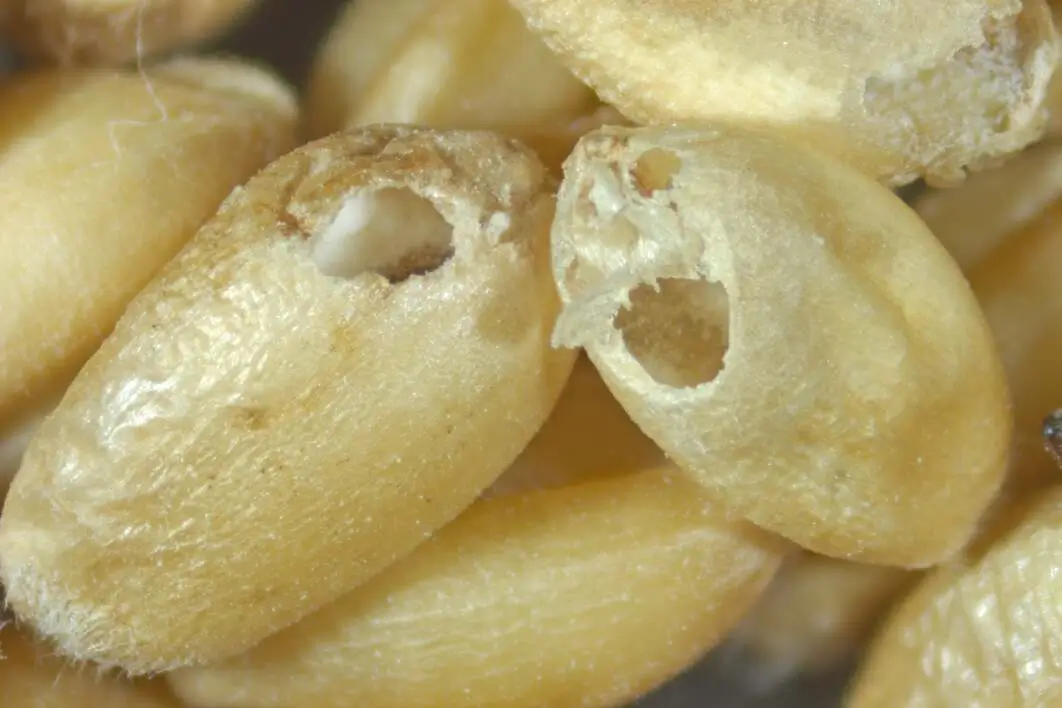
Internal feeders lay eggs inside kernels, and larvae develop unseen until adults emerge. As a result, external inspection can look clean even while the embryo is fully consumed (OSU Extension). Traditional manual sampling struggles to detect:
- Early larval stages enclosed within intact husks.
- Subtle chewing marks or micro-holes between grooves.
- Temperature pockets where insects cluster below the surface.
For a complete overview of how European labs classify these defects, revisit our grain purity testing guide.
Stakeholder Risk vs. Value of Early Detection
| Stakeholder | Risk from undetected infestation | Value from early, accurate detection |
|---|---|---|
| Grain silos & storage firms | Mass loss, quality degradation, emergency fumigation costs, rejected loads | Clean inventory, lower write-offs, documented quality control evidence |
| Exporters / traders | Penalties under trade standards, shipment rejection, reputational damage | Proof-based compliance, fewer disputes, smoother contract execution |
| Ports & logistics hubs | Cross-contamination across tenants, regulatory breaches, dwell-time delays | Safe intake, auditable chain-of-custody, export-ready grain |
| Feed / food processors | Contaminated raw materials, recalls, downstream product failures | Reliable input quality, consumer safety assurances, better planning |
Modern grain handlers must treat pest inspection not as a periodic audit but as a strategic control point applied to every load.
Why Traditional Pest Control Is No Longer Enough
- Chemical fumigation is expensive, faces regulatory limits, and pests develop resistance (EcoCare Labs).
- Manual inspection is slow and inconsistent, particularly with internal feeders and early-stage infestations (European monitoring study).
- Reactive treatments after detection rarely recover the hidden losses already incurred.
The industry must shift toward proactive, technology-based detection, combining AI inspection with improved storage hygiene, aeration, and moisture control.
If you need a refresher on the digital toolkit available, our overview of grain analyzers and AI inspection workflows breaks down the pros and cons of each technology.
How GrainODM Supports Early Detection
GrainODM pairs high-resolution imaging with AI classification to highlight insect-damaged or abnormal kernels during intake:
- On-image detections spotlight damaged kernels so operators can segregate lots instantly.
- Per-class statistics quantify the share of insect-damaged kernels, broken grain, or foreign objects in seconds.
- Automated digital reports create traceable audit trails for every batch, reducing compliance friction.
By catching infestations immediately, facilities avoid mixing affected grain, reduce fumigation frequency, and maintain consistent quality standards.
For a concrete example of these benefits in production, review how JSC Grainmore achieved 75× faster analysis with GrainODM.
What Industry Operators Should Do Next
- Treat pest detection as an operational risk metric and add digital inspection to intake SOPs.
- Deploy automated tools such as GrainODM to supplement or replace spot-based manual checks.
- Document inspection outputs per batch to build traceable audit records.
- Combine inspection with fundamentals: sanitation, aeration, temperature monitoring, and moisture control.
- Plan long-term resilience — technology-led inspection will define competitive advantage as climate pressure rises.
Conclusion: Hidden Weevils, Hidden Losses
Internal feeders like wheat weevils remain one of the most serious threats to stored grain value, safety, and reputation. The discovery of live pests in a single intake sample is a reminder that the risk is real, present, and often invisible. For elevators, silos, exporters, and traders, ignoring this threat is no longer an option. Digital, AI-powered inspection systems such as GrainODM offer a scalable, proactive defense — moving grain quality control from guesswork to data-backed certainty.
Frequently Asked Questions
They are internal feeders that lay eggs inside kernels; larvae tunnel within the grain so outer husks look intact until damage is advanced.
Controlled studies recorded 12 to 26 percent weight loss plus severe quality degradation from Sitophilus granarius infestations over a single storage season.
AI inspection reviews every kernel, captures annotated imagery, and produces tamper-proof reports that satisfy intake documentation and client audits.
The New Standard in Grain Purity Analysis
Data, not guesswork. Learn how GrainODM sets a new benchmark for digital grain inspection.