


Key Takeaways
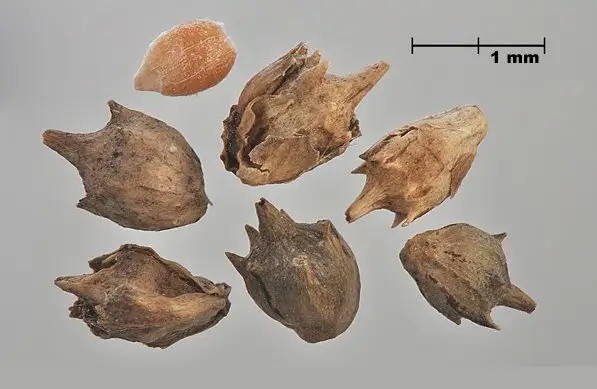
Ragweed seeds are quarantine botanical impurities with zero or near-zero tolerance in many countries; one detected seed can trigger port detention or cargo rejection.
The Egypt 2016 case saw ~175,000 tons of soybeans detained and millions in losses due to ragweed contamination-costs measured in milligrams of impurity.
EU Directive 2002/32/EC sets a 50 mg/kg limit for ragweed in feed materials (~10–15 seeds/kg); many importers apply stricter or de facto zero tolerance.
Traditional visual inspection has statistical and human limitations; zero-tolerance demands certainty that sampling alone cannot guarantee.
AI-powered inspection complements human expertise: first-pass screening, documented results, and early detection at elevator or port reduce late-detection risk.
In global grain trade, few contaminants create as much phytosanitary risk as Ambrosia, commonly known as ragweed. For grain elevator managers, quality control laboratories, international traders, and operations directors, ragweed contamination isn’t a minor quality issue-it’s a shipment-stopping event with the potential to cause millions in direct and indirect losses.
Unlike typical dockage or broken kernels, ragweed seeds are classified in many countries as quarantine botanical impurities. Other regulated contaminants, such as fusarium, face similar detection and tolerance challenges. This classification means zero-tolerance or near-zero-tolerance policies. In practical terms, a single detected seed can be enough to trigger port detention, forced re-cleaning, cargo rejection, or full shipment diversion.
The danger lies in the combination of ragweed biology, strict regulation, and the inherent limitations of traditional inspection approaches. Together, these factors create one of the highest-risk failure points in modern grain quality control.
The Biological Threat: Why Ragweed Is So Insidious
Scientific research confirms that Ambrosia artemisiifolia seeds can remain viable in soil for up to 40 years. Studies conducted by agricultural universities in Europe and North America show that a significant percentage of seeds still germinate after 20 years when environmental conditions allow.
This long-term viability explains why regulators treat ragweed as a serious invasive species. Once introduced through grain shipments, the weed can establish itself for decades.
Massive Reproductive Capacity
One ragweed plant can produce up to 60,000 seeds in a single growing season. This means that even minimal contamination escaping inspection can scale into widespread infestation within a few seasons.
Let’s do the math: If just 5 seeds out of 60,000 survive and germinate the next year, and each produces another 60,000 seeds-that’s already 300,000 new seeds. Over three years, this becomes exponential spread.
Agricultural and Health Impact
Ragweed isn’t just an agricultural problem. It’s also one of the most aggressive allergenic plants globally. A single plant can release billions of pollen grains, contributing to severe respiratory allergies and public health costs.
According to Allergy & Asthma Network, allergic rhinitis and asthma affect hundreds of millions of people worldwide, with ragweed being one of the primary culprits.
This dual threat-both to agriculture and health-is a major reason why authorities enforce strict phytosanitary controls.
Economic Disaster in Practice: The Egypt 2016 Soybean Case
The financial consequences of ragweed contamination aren’t theoretical. A clear example occurred in 2016, when Egypt rejected multiple soybean shipments after detecting ragweed seeds.
According to USDA FAS, Egyptian plant quarantine authorities detained approximately 175,000 tons of soybeans after inspections revealed ragweed contamination exceeding local tolerance thresholds. Several vessels, each carrying around 30,000 tons, were stopped at port.
The Consequences Were Dramatic:
- Mandatory sieving and re-cleaning of cargo
- Vessel delays ranging from 10 to 21 days
- Additional costs estimated at $5-7 per ton
- Severe disruption of local feed supply chains
- Feed price escalation inside Egypt
The total financial impact reached millions of euros, driven by demurrage, port fees, re-cleaning operations, and contract disputes.
All of this was caused by botanical impurities measured in milligrams.
Port Inspections, Demurrage, and the Hidden Cost of Late Detection
When ragweed contamination is detected at the destination port, financial exposure increases dramatically. Port authorities don’t negotiate phytosanitary violations. Early screening with AI-powered port inspection can reduce the risk of late detection at destination.
Typical Outcomes:
Phase 1: Detention
- Immediate cargo hold at port
- Secondary inspection procedures initiated
Phase 2: Accumulating Costs
- Extended vessel waiting time
- Demurrage charges accumulating daily
- For large bulk carriers, rates can reach $20,000-50,000 per day
Phase 3: Corrective Actions
- Forced on-site re-cleaning or sieving
- Cargo downgrading
- Redirection to lower-value markets
Real Example: If a 50,000-ton grain shipment is detained for 14 days with a demurrage rate of $30,000/day:
- Demurrage alone: $420,000
- Add cleaning, inspection, administrative costs
- Total exposure: $500,000-750,000
Unlike quality disputes, phytosanitary failures are regulatory decisions, not commercial ones. Once ragweed is detected, control shifts from traders to quarantine authorities. This removes flexibility and often leads to disputes between buyers, sellers, insurers, and logistics providers.
Regulatory Framework: Why Tolerance Levels Are Extremely Low
Within the European Union, ragweed seeds are classified as undesirable substances in animal feed. EU Directive 2002/32/EC sets a maximum threshold of 50 mg per kg for ragweed seeds in feed materials. For broader context on grain admixture standards (EU vs USA), see our comparison.
What does this mean in practice?
- 50 mg/kg ≈ 10-15 seeds per kilogram
- Average ragweed seed weighs 3-4 mg
- Exceeding this limit makes the product non-compliant and illegal to market
Zero-Tolerance Policies Outside the EU
Many importing countries apply even stricter rules:
| Country/Region | Policy |
|---|---|
| Egypt | De facto zero tolerance |
| China | Quarantine weed – prohibited |
| Japan | Strict inspection, low tolerance level |
| South Korea | Phytosanitary certificate required |
For exporters, this means operating under an assumption of near-zero tolerance globally, regardless of destination.
The Challenge of Detection: Why Traditional Methods Struggle
The fundamental challenge in grain inspection is statistical. A bulk vessel may carry 50,000 tons of grain, while quality control samples typically represent 2-5 kilograms-a representation ratio of approximately 0.00001%. Standard grain purity testing relies on visual analysis and becomes a weak link when zero-tolerance contaminants must be detected with absolute certainty.
Ragweed seeds are not evenly distributed throughout bulk grain. They tend to concentrate in specific areas, meaning contaminated pockets can easily be missed even with proper sampling protocols.
The Complexity of Visual Identification
Identifying ragweed seeds requires specialized expertise. According to Canadian seed inspection guidelines, botanical seed identification involves:
Microscopic Analysis Requirements:
- Seeds are small (3-4 mm long)
- Dark colored, easily confused with other weed seeds
- Require microscope examination for definitive identification
- Multiple similar-looking species must be distinguished
Laboratory Procedure Complexity:
- Samples must be thoroughly mixed and divided to prescribed weights
- Seeds placed in single layer in specialized inspection trays
- Passed through illuminated area under microscope lens
- Admixture picked out with tweezers and weighed for percentage determination
Time and Volume Pressures
Professional grain inspection follows USDA Federal Grain Inspection Service standards, which require:
- Standardized procedures for every sample
- Proper documentation and record-keeping
- Work samples of approximately 1,000-1,050 grams per analysis
- Multiple quality factors checked per sample
During peak harvest seasons, laboratories process high volumes of samples. While individual sample inspection time varies by grain type and required tests, the combination of:
- Proper sampling protocols
- Thorough visual examination under magnification
- Documentation requirements
- Multiple quality factor assessments
…creates significant throughput challenges, especially when zero-tolerance contaminants must be detected with absolute certainty.
Human Factors in Critical Detection
Even with highly trained, licensed inspectors following official procedures, the reality is that visual inspection of botanical contaminants has inherent limitations:
Consistency Challenges:
- Ragweed seeds can vary in appearance depending on maturity
- Similar-looking weed seeds require careful differentiation
- Results can vary between inspectors and laboratories
- Lighting conditions and microscope quality affect detection
The Zero-Tolerance Problem: The issue isn’t that traditional inspection is inherently flawed-it’s that zero-tolerance requirements demand a level of certainty that is statistically challenging to achieve through visual sampling alone. As our case study on manual wheat sprout detection showed, human inspection can miss critical defects that AI detects consistently-especially given the tiny representation ratio and non-uniform distribution of contaminants.
Modern Solutions: Moving Beyond Visual-Only Inspection
Similar to manual wheat sprout detection failures, ragweed benefits from AI-assisted screening. A broader study comparing AI to five lab technicians across 600+ wheat tests is summarized in AI vs. 5 Lab Technicians. The grain industry is increasingly adopting AI-powered visual inspection systems to complement traditional quality control processes. These technologies address the fundamental statistical and consistency challenges inherent in detecting trace contaminants.
Systems like GrainODM use advanced computer vision to analyze grain samples with speed and consistency that traditional methods cannot match.
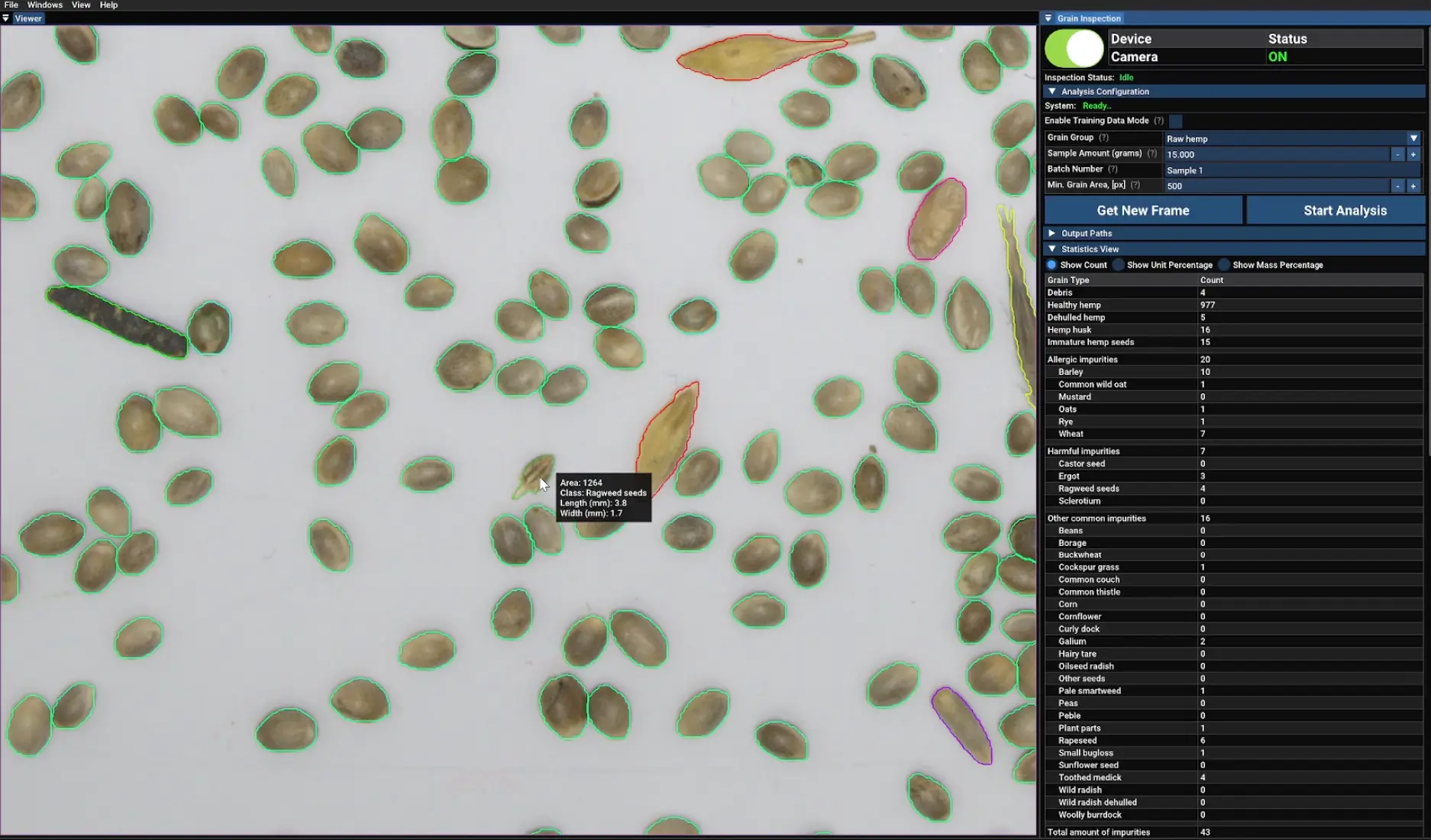
Watch: How GrainODM Inspects Grains and Detects Ambrosia
How AI-Enhanced Inspection Works
Advanced computer vision systems analyze grain samples using:
High-Resolution Imaging:
- Multiple high-speed camera capture detailed images of every kernel
- Samples spread in single layer for complete visual coverage
- Consistent lighting eliminates human-eye variability
Pattern Recognition:
- AI models trained on thousands of seed images
- Recognizes morphological details at sub-millimeter scale
- Distinguishes ragweed from similar but harmless seeds
- GrainODM achieves 99.8% accuracy in botanical impurity detection
Objective, Documented Results:
- Every detection backed by photographic evidence
- Digital reports provide traceable quality records
- Eliminates subjective interpretation differences
- 3-second analysis time per sample enables real-time screening
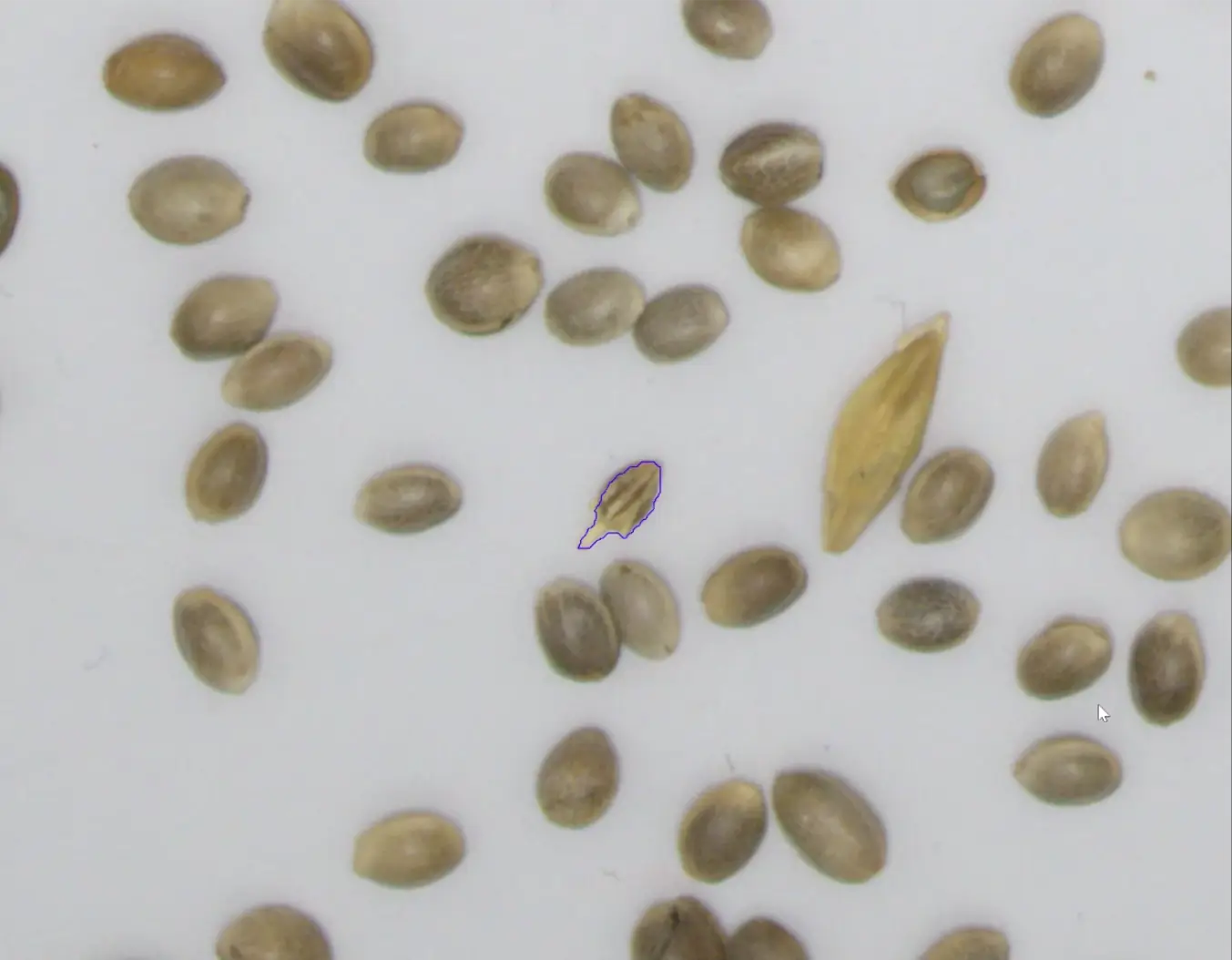
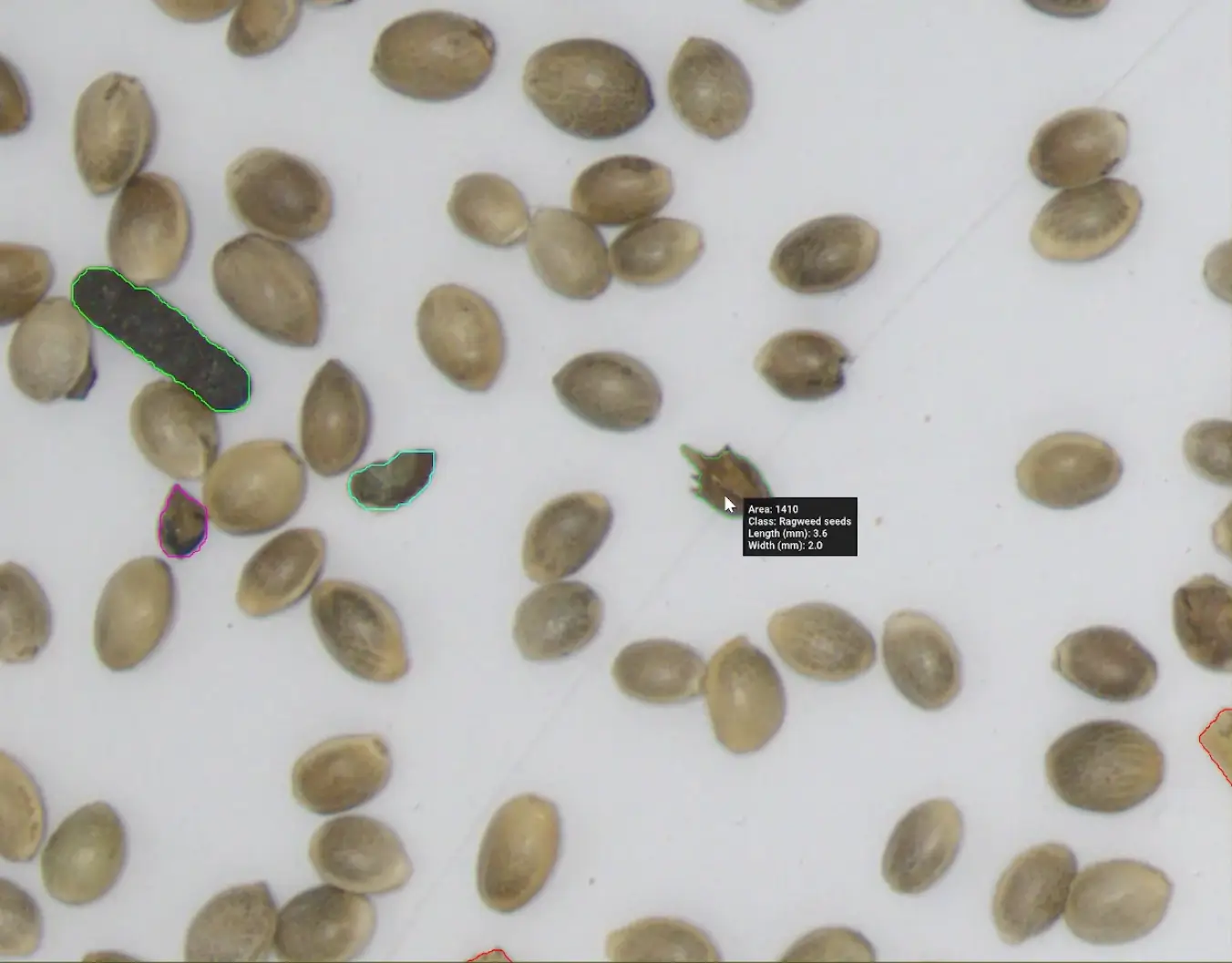
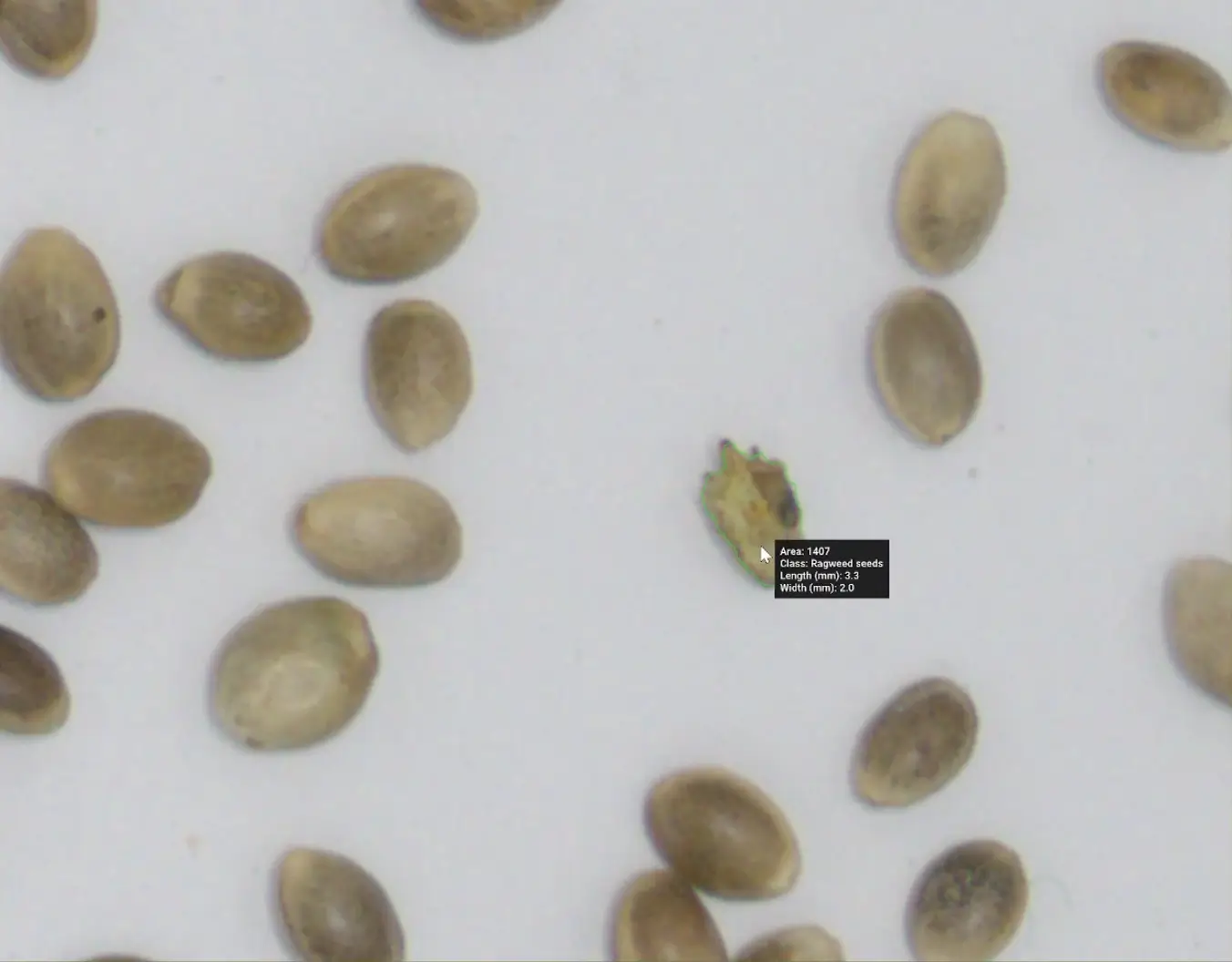
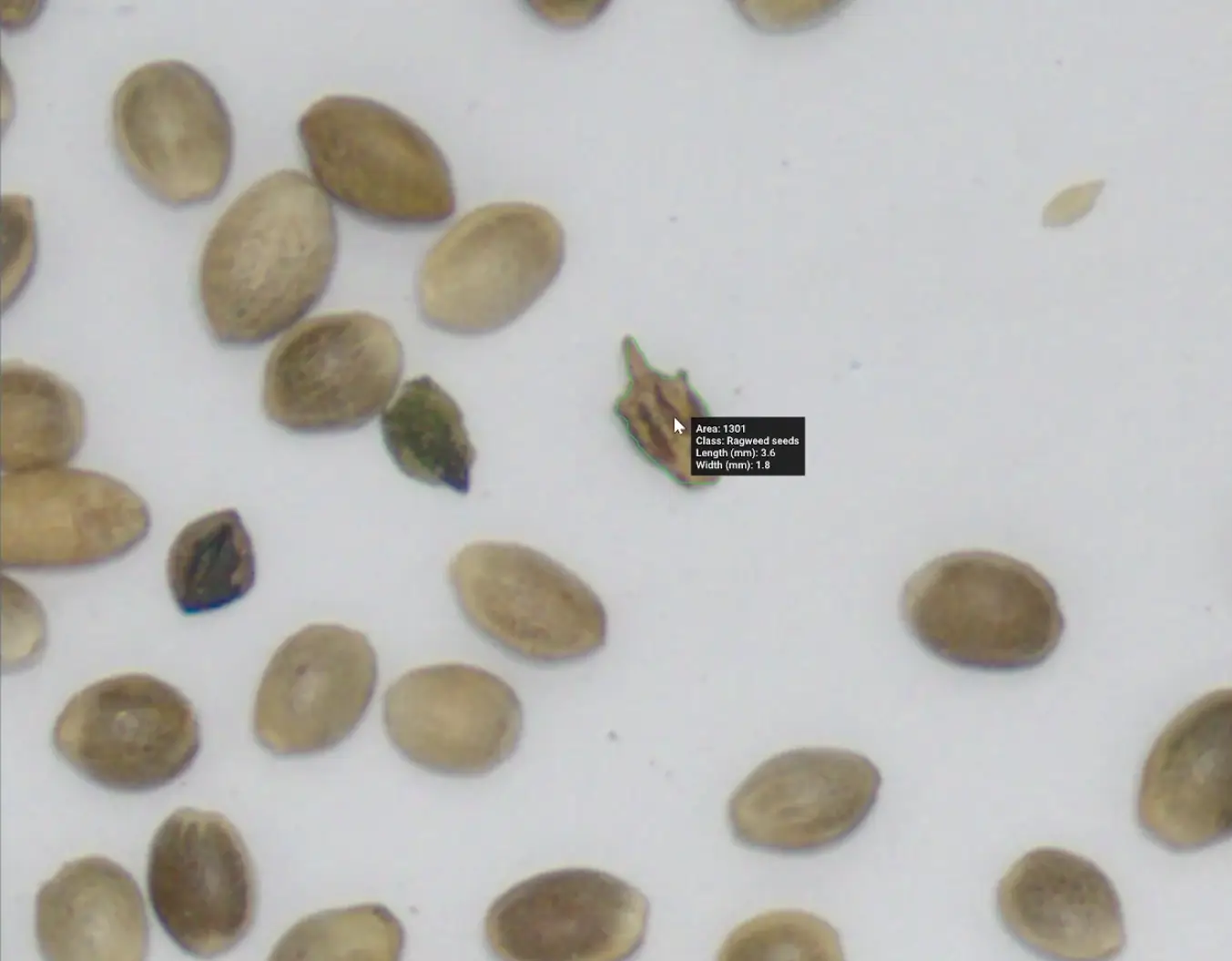
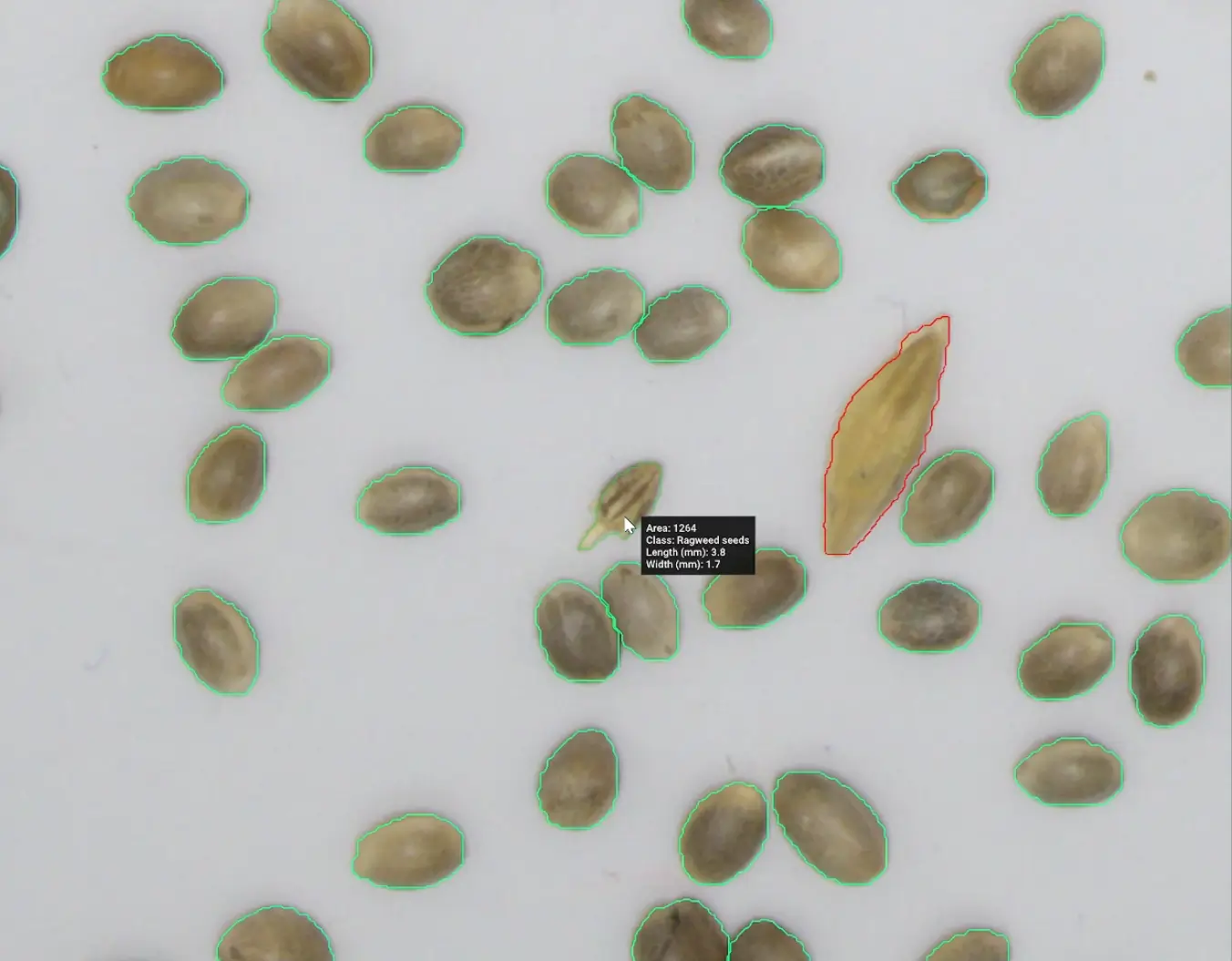
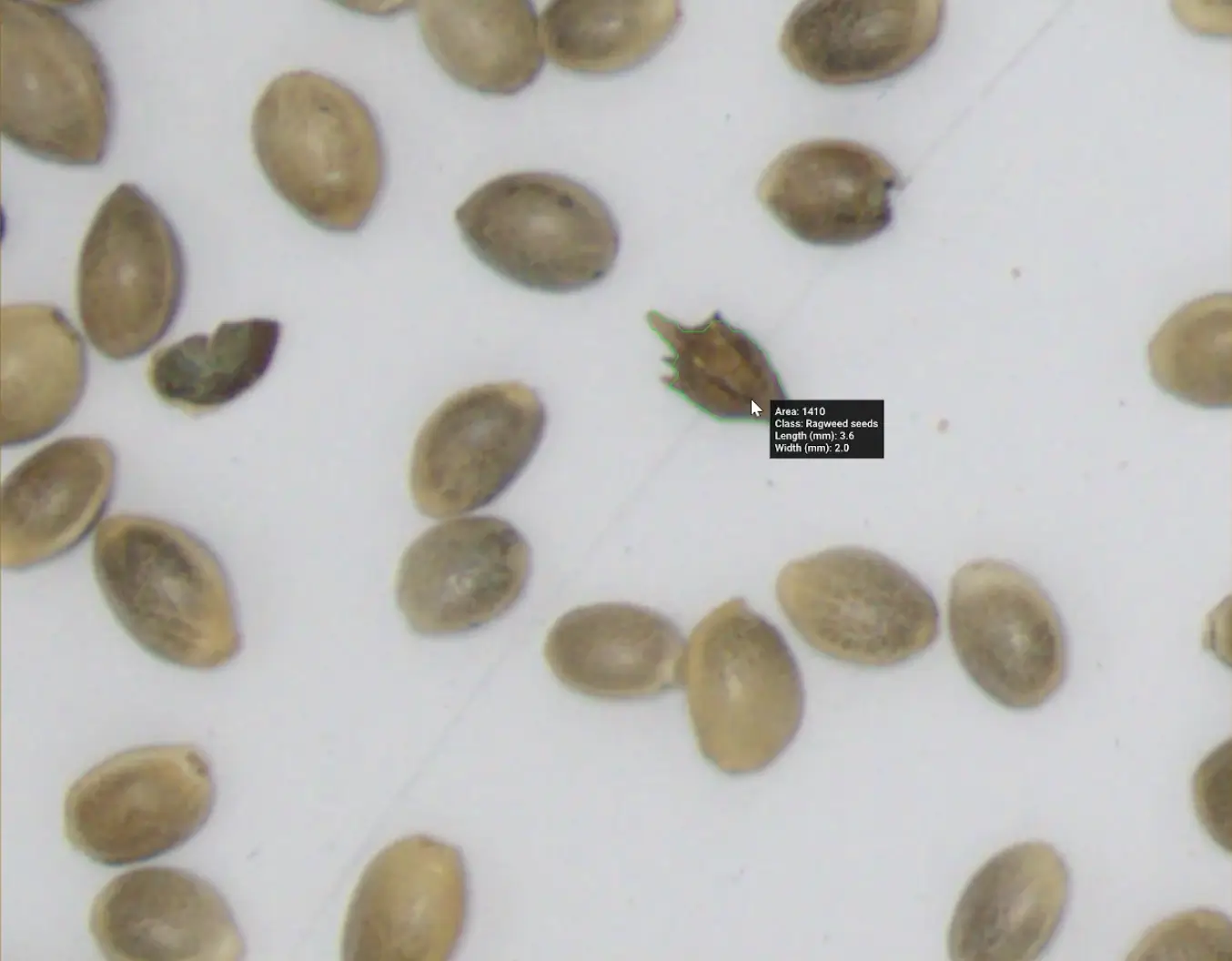
Images from GrainODM analysis where Ambrosia (ragweed) was detected.
Complementing, Not Replacing, Human Expertise
These systems work best as part of a multi-layered quality strategy:
- First-Pass Screening: AI systems rapidly analyze every batch
- Flagged Sample Review: Questionable results reviewed by trained inspectors
- Regulatory Compliance: Official inspections still conducted for export certification
- Early Warning System: Contamination detected at elevator stage-or at AI-powered port inspection-before shipment.
Conclusion: Zero Tolerance Demands Systematic Approach
Ragweed contamination represents one of the most underestimated risks in grain trade. The Egypt 2016 case and numerous other incidents demonstrate that one missed seed can cost millions.
With seed viability measured in decades and regulatory thresholds measured in milligrams, the margin for error is effectively zero.
The path forward requires:
- Recognition that traditional sampling has statistical limitations
- Investment in complementary detection technologies
- Multi-layered quality control strategies
- Systematic rather than reactive approach to risk management
For companies serious about grain quality control, the conclusion is clear: Zero tolerance requires systematic risk management, combining the best of human expertise, proven procedures, and modern technology.
Frequently Asked Questions
Due to extreme seed longevity (40-year viability), invasive behavior, and public health impact, ragweed is classified as a quarantine weed in many countries. Its ability to establish permanent populations from a single introduction makes it a priority phytosanitary concern.
Shipments may be detained, re-cleaned, rejected, or redirected. Demurrage and operational costs can escalate rapidly-often reaching $500,000+ per incident. Unlike commercial quality disputes, these are regulatory decisions with limited negotiation flexibility.
In practice, yes. The limit corresponds to approximately 10-15 seeds per kilogram and is easily exceeded. Many buyers apply even stricter internal standards, and some destination countries enforce complete prohibition.
The New Standard in Grain Purity Analysis
Data, not guesswork. Learn how GrainODM sets a new benchmark for digital grain inspection.